Shadow Fight 2 vs Other Fighting Games: Key Differences Compared
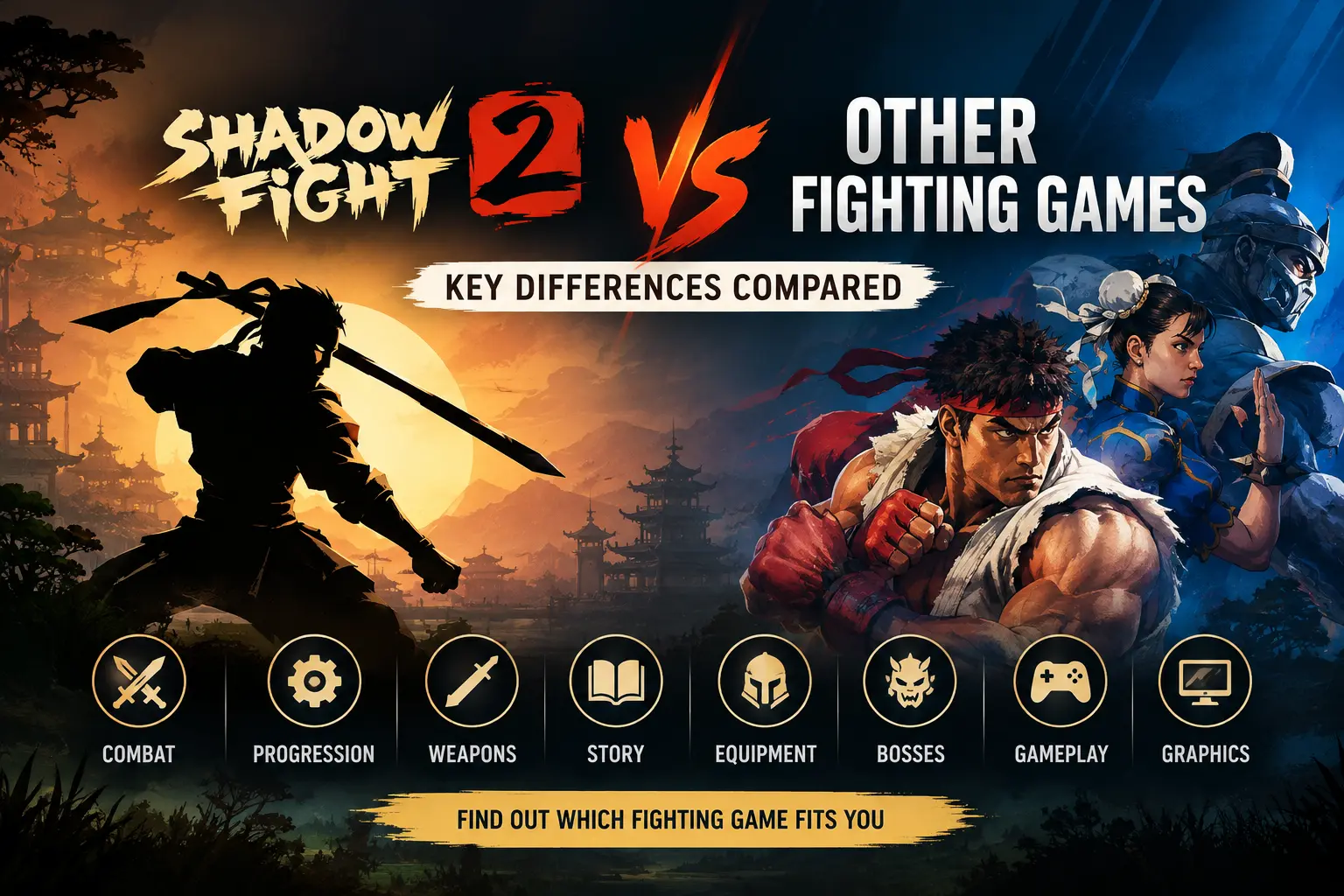
Shadow Fight 2 differs from many fighting games because its combat is connected to weapons, equipment upgrades, story progression, special abilities, and boss battles. Traditional fighting games may focus more heavily on character matchups, combos, competitive matches, or PvP.
If you are comparing Shadow Fight 2 vs other fighting games, looking only at combat mechanics does not tell the full story. Different fighting games are designed around different experiences, from campaign-based progression to character mastery and competitive play.
This guide compares Shadow Fight 2 with common fighting-game formats across combat, controls, progression, weapons, story, graphics, boss battles, and competitive gameplay.
Shadow Fight 2 vs Other Fighting Games at a Glance
The table below gives you a quick overview of how Shadow Fight 2 compares with common fighting-game styles.
| Feature | Shadow Fight 2 | Other Fighting Games |
|---|---|---|
| Combat style | Side-view fighting | Varies by game |
| Story campaign | Yes | Varies |
| RPG-style progression | Yes | Varies |
| Weapons | Yes | Varies |
| Armor and equipment | Yes | Varies |
| Special abilities | Yes | Varies |
| Boss battles | Yes | Varies |
| Character upgrades | Yes | Varies |
| Competitive focus | Depends on mode | Varies |
| Visual style | Shadow-based | Varies |
This table is only a starting point because fighting games can use very different systems. The sections below explain where those differences come from.
Combat Comparison
Combat is the most obvious part of any fighting game, but the way battles are designed can vary significantly.
Fighting Mechanics
Shadow Fight 2 uses side-view combat built around punches, kicks, movement, defense, weapons, and special abilities. Players need to react to opponents while deciding when to attack, defend, or reposition.
Other fighting games may put greater emphasis on character-specific movesets, extended combos, special attacks, or competitive matchups. Some are built mainly around short one-on-one battles, while others connect combat to a larger campaign.
The important difference is that Shadow Fight 2 does not treat combat as a completely separate activity. Battles are connected to equipment, progression, and the wider campaign.
Controls and Timing
Timing and positioning play an important role in Shadow Fight 2. Players need to understand attack range, opponent movement, defensive opportunities, and the timing of their own attacks.
Traditional character-based fighters can require players to learn detailed inputs, longer combos, character-specific techniques, and precise timing. Competitive games may also place greater emphasis on learning matchups and reacting to another human player.
The exact control system depends on the individual title, but Shadow Fight 2 combines its combat controls with a broader progression system.
Progression and Game Structure
Progression is one of the clearest differences between Shadow Fight 2 and fighting games that are primarily built around individual matches.
Shadow Fight 2’s RPG-Style Progression
Shadow Fight 2 includes RPG-style elements through equipment, upgrades, abilities, and campaign advancement. Players progress through battles while improving their available gear and preparing for more difficult opponents.
The basic gameplay loop can be described as:
Fight → earn or obtain equipment → upgrade → face tougher challenges → continue the campaign.
This means individual battles contribute to longer-term progress instead of existing only as separate matches.
How Other Fighting Games Handle Progression
Other fighting games can use very different progression systems. Some focus on unlocking characters, stages, cosmetics, rankings, or competitive rewards. Others include story or arcade modes while keeping individual matches at the center of the experience.
Character-focused fighters may place more importance on mastering one character’s moveset, while competitive titles can emphasize rankings and repeated PvP matches.
Shadow Fight 2 takes a different approach by making equipment and campaign advancement important parts of the combat experience.
Weapons and Equipment Comparison
Weapons and equipment are another major difference to consider.
Weapons in Shadow Fight 2
Shadow Fight 2 includes different types of weapons and combat equipment. Players can also use armor, helmets, ranged equipment, and special abilities as they progress.
This gives players additional factors to consider when preparing for battles. Equipment can affect how players approach different opponents and challenges.
For players who enjoy improving gear alongside combat, this creates a different experience from games where the selected character and fixed moveset determine most of the fighting style.
Character-Based Fighting Games
In many traditional fighting games, the selected character determines the majority of the player’s basic fighting style. Each character may have a distinct moveset, special attacks, strengths, weaknesses, and matchup considerations.
Instead of frequently changing equipment throughout a campaign, players may spend more time mastering a particular character and learning how that character performs against different opponents.
Shadow Fight 2 combines character progression with equipment, creating another layer of preparation before battles.
Story and Boss Battles
Story progression can significantly change how a fighting game feels.
Shadow Fight 2’s Campaign
Shadow Fight 2 follows Shadow through a campaign involving different locations, opponents, challenges, and progression milestones.
This gives players a reason to continue beyond individual fights. Battles contribute to the larger campaign, while equipment and abilities become useful as the challenges increase.
Boss encounters also give the campaign additional milestones, requiring players to adapt their approach as they move forward.
Match-Focused Fighting Games
Some fighting games are structured primarily around individual matches. Players select a character, enter a battle, and then move into another match or competitive encounter.
These games can still include story modes, arcade modes, tournaments, or other activities, but their main gameplay loop may revolve around repeated fights rather than long-term equipment progression.
This distinction matters when deciding whether you prefer a campaign-driven fighting experience or a match-focused one.
Graphics and Visual Style
Visual presentation is another major difference between fighting games.
Shadow-Based Presentation
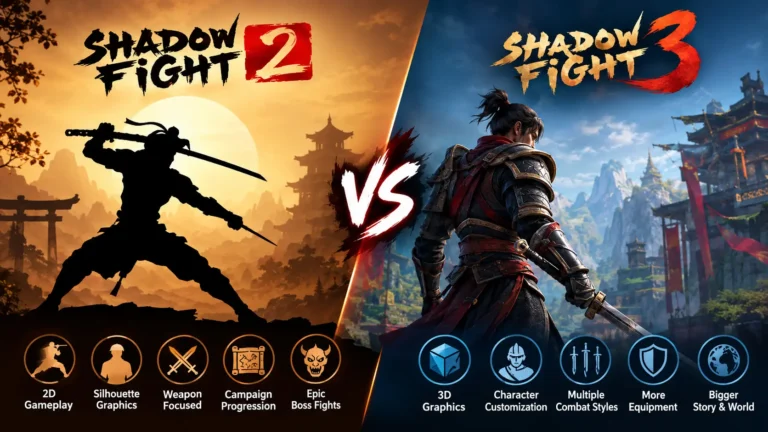
Shadow Fight 2 uses a distinctive silhouette-based visual style for its characters. The shadow-like presentation makes movement, animation, weapons, and combat actions particularly noticeable.
Rather than relying on detailed character models, the game uses its visual design as part of its overall identity.
Other Fighting Game Visual Styles
Other fighting games can use realistic 3D characters, stylized designs, anime-inspired visuals, detailed environments, or cinematic effects.
Because visual preferences are subjective, this comparison is about design direction rather than which style is better. Players may prefer one approach depending on the type of presentation they enjoy.
Single-Player vs Competitive Experience
Another useful way to compare fighting games is to look at how players are expected to spend their time.
Shadow Fight 2’s Campaign Experience
Shadow Fight 2 places significant emphasis on progressing through its campaign, fighting opponents, improving equipment, and reaching new challenges.
This structure can appeal to players who like having a progression path where battles contribute to a larger goal.
Competitive Fighting Games
Competitive fighting games can place greater emphasis on player-versus-player battles, matchmaking, rankings, tournaments, and repeated head-to-head competition.
For these games, learning a particular character, understanding matchups, and improving competitive execution can become central parts of the experience.
The two formats serve different gameplay preferences: one can emphasize campaign progression and gear, while another may emphasize competition and character mastery.
Shadow Fight 2 vs Other Fighting Games: Which Playstyle Fits You?
There is no single feature that defines every fighting game. The better comparison is to identify which type of gameplay you prefer.
| If You Prefer | Look for |
|---|---|
| Story and campaign progression | Games with longer single-player campaigns |
| Weapons and equipment | Games where gear affects combat or progression |
| Character mastery | Character-focused fighting games |
| Competitive PvP | Games built around matchmaking and ranked battles |
| Boss encounters | Campaign-driven fighting games with major opponents |
| Combos and precise inputs | Fighters that emphasize technical execution |
| Upgrades and progression | Games with RPG-style systems |
Players Who Like Story and Progression
Shadow Fight 2 can suit players who enjoy a campaign with battles, equipment upgrades, different opponents, special abilities, and boss encounters.
The combat is connected to longer-term progression, so individual battles contribute to the overall campaign.
Players Who Prefer Competitive Fighting
Players who mainly enjoy PvP matches, competitive rankings, character matchups, or repeated head-to-head battles may prefer games designed around those systems.
In these games, learning a particular character and improving competitive skills can be more central to the experience.
Players Who Like Weapon-Based Combat
Players interested in weapons and equipment may find Shadow Fight 2 different from games where characters rely primarily on fixed movesets.
Weapons, armor, ranged equipment, and abilities add another layer to the combat and progression systems.
Players Who Prefer Traditional Character-Based Combat
If your main interest is selecting a character with a specific moveset and mastering that character across repeated matches, a traditional character-focused fighting game may provide a different experience.
The key distinction is between progression-focused combat and match-focused combat.
What Should You Compare Before Choosing a Fighting Game?
When comparing Shadow Fight 2 with another fighting game, look beyond graphics or character count.
Consider these factors:
- Combat: How do attacks, defense, movement, and special abilities work?
- Progression: Does the game include equipment, upgrades, rankings, or unlockables?
- Weapons: Are weapons an important part of gameplay?
- Story: Is there a campaign with ongoing progression?
- Bosses: Does the game include major boss encounters?
- Multiplayer: Is PvP a major part of the experience?
- Controls: Does the game emphasize simple attacks or complex inputs and combos?
- Visual style: Does the presentation match your preference?
- Playtime: Do you prefer campaign progression or repeatable competitive matches?
Looking at these factors gives you a more useful comparison than simply asking which fighting game is the best.
Shadow Fight 2 vs Other Fighting Games: Final Comparison
Shadow Fight 2 occupies a different type of fighting-game experience because it combines combat with story progression, weapons, equipment, upgrades, special abilities, and boss battles.
Traditional character-based fighting games may place more emphasis on mastering individual movesets, combos, matchups, or competitive battles. Other titles may combine campaign progression with PvP or use completely different progression systems.
The main difference is the type of experience each game provides. Shadow Fight 2 connects battles to a longer campaign and equipment progression, while other fighting-game formats may focus more heavily on character mastery, competitive matches, or technical combat.
Features and available modes can vary by game version and platform, so check the current version details before relying on a specific feature.
Frequently Asked Questions
Is Shadow Fight 2 different from traditional fighting games?
Yes. Along with fighting mechanics, Shadow Fight 2 combines combat with story progression, equipment upgrades, weapons, special abilities, and boss battles.
Does Shadow Fight 2 have RPG elements?
Yes. Shadow Fight 2 includes RPG-style elements such as character progression, equipment, upgrades, and abilities.
Does Shadow Fight 2 use weapons and armor?
Yes. Weapons and equipment are important parts of the game’s progression and can influence how players approach different battles.
Is Shadow Fight 2 focused on story or competitive fighting?
Its campaign and progression systems are important parts of the experience. Available modes and features can vary by version and platform, so players should check the current build for specific multiplayer or competitive features.
What type of player may enjoy Shadow Fight 2?
Shadow Fight 2 may appeal to players who enjoy fighting combat combined with story progression, equipment upgrades, weapons, special abilities, and boss encounters.